Toilet Seat Cover Redesign
My Contributions
- Conducted generative and evaluative research
- Created and tested prototypes
- Analyzed and synthesized data
- Compiled images and created presentation to client
Background
The brand Hospeco hired Trident Design to help them develop new products for their company. They specialize in public restroom and commercial cleaning products.
Design Opportunity
Hospeco was looking for upgrade potential for toilet seat covers. The general public often has a negative perception of public restroom cleanliness and the effectiveness of a seat cover.
Strategy
Conduct interviews with users to discover room for improvement. Based on findings, prototype and test variations of seat covers.
Goal
Improve the user’s overall experience and perception of using toilet seat covers, increase the usage of seat covers to sell more product.
Be warned, there are a lot of photos of toilets coming up!
Company
Trident Design
Team Members
Approximately 5
Why I am featuring this project
I came up with a strategy for guerilla testing of prototypes
Iterative rounds of research
Brainstorm Session
Before being officially hired on by the company, our design team gathered together to brainstorm opportunities for product development. During this session we:
Gathered samples of current Hospeco products
Researched the current market landscape
Ideated product line expansions and opportunities for user experience improvements
Our initial pitch deck included inspiration, categories, rough sketches, and development budget on a scale of 1 to 5. Our team consisted of approximately 5 industrial designers, and we all contributed to the research, brainstorming and ideation. One designer sketched all concepts. Sample pages from our pitch deck are below.
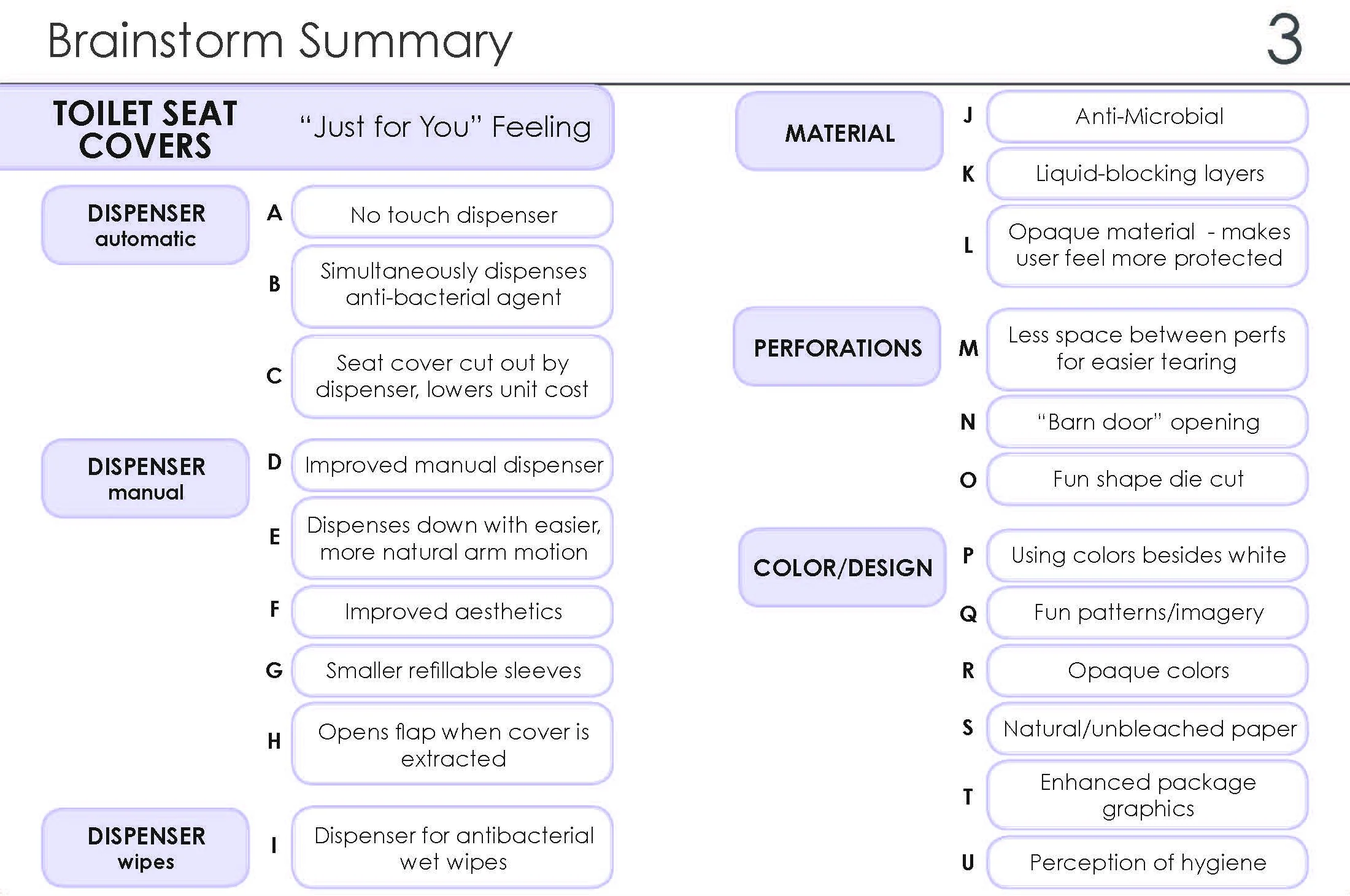
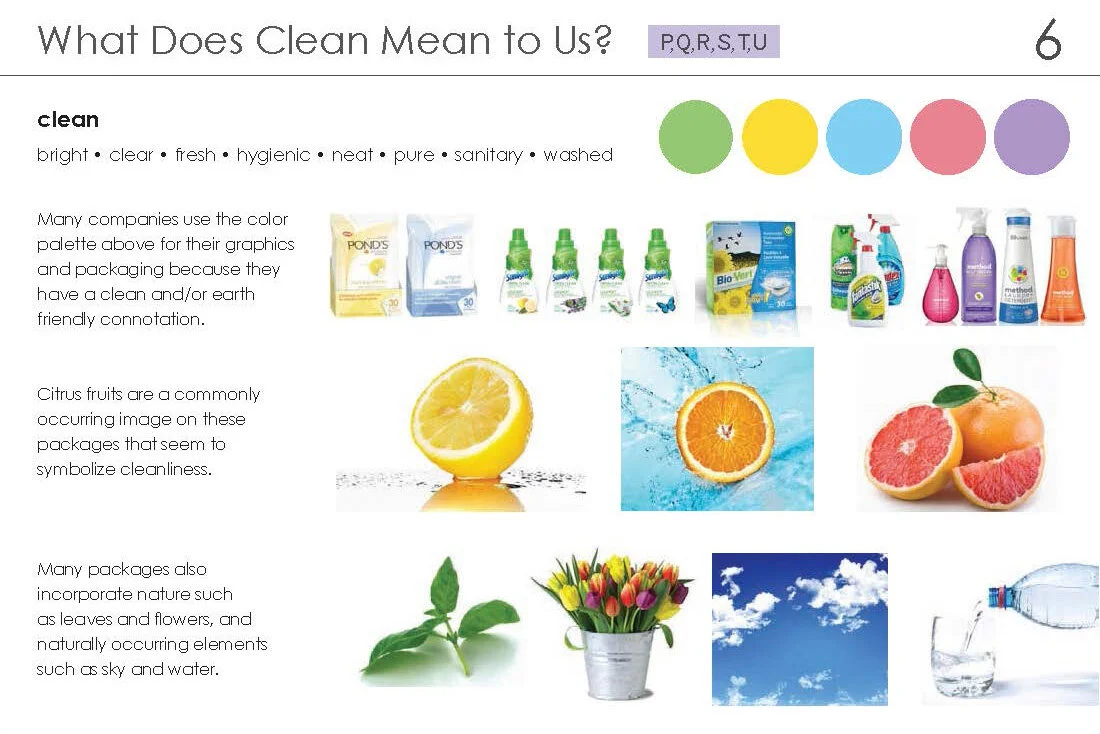
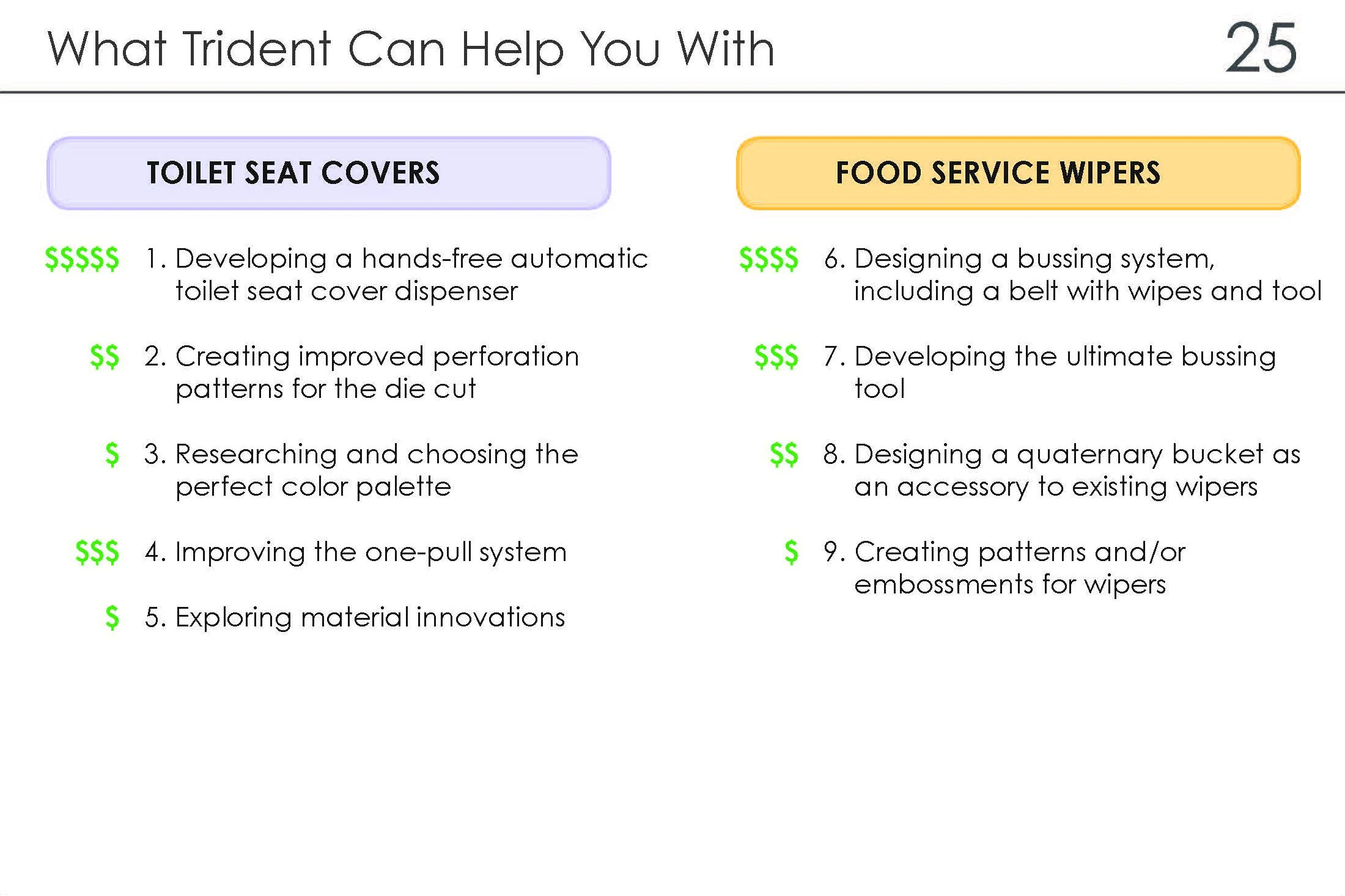
Out of the 5 categories we pitched to them, Hospeco selected Toilet Seat Covers and Food Service Wipers (Restaurant Bussing System). On this page, I go more into detail on the Toilet Seat Covers project - for more on the Bussing System project, visit that page.
Initial Research
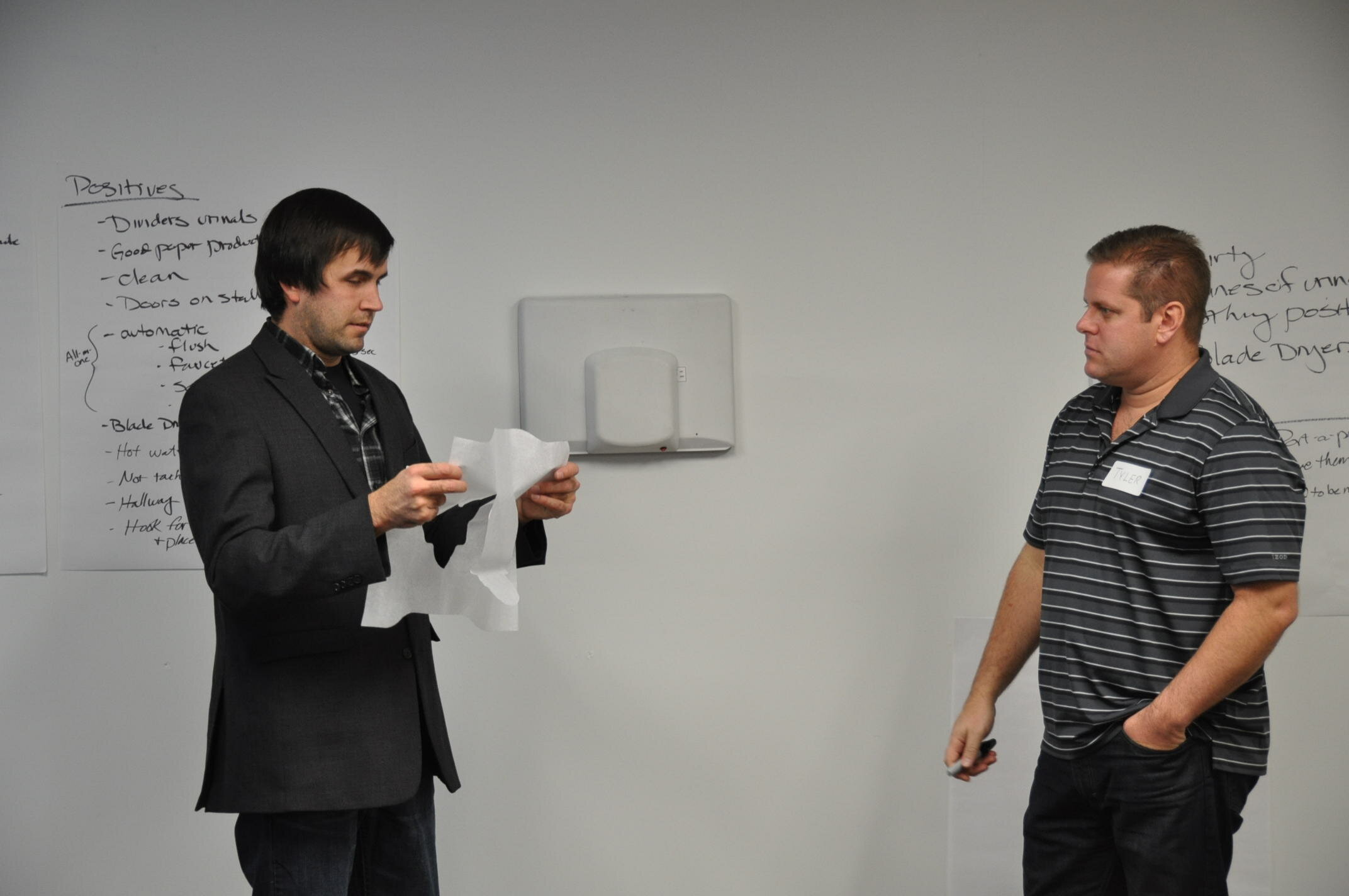
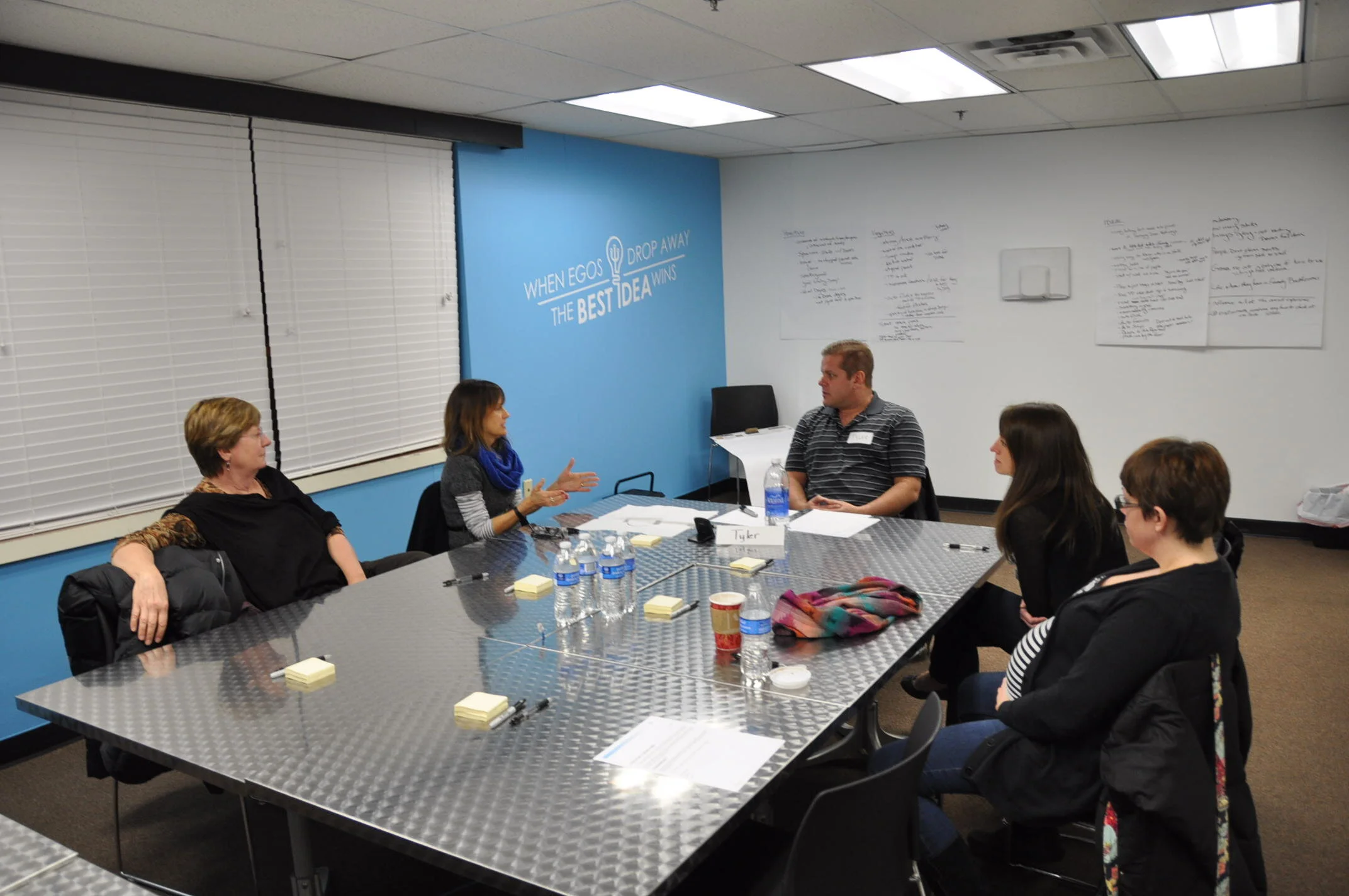
Strategy: 2 focus groups, participants divided by gender for privacy, run by a trained facilitator
Goal: Learn more about user experiences with toilet seat covers and dispensers, get feedback on potential improvements.
Insights: Users want seat covers to stay in place, offer full coverage, and be easily disposed of with minimal contact with the toilet seat.
Prototyping and Testing
Taking the insights we collected from the focus groups, we moved into our first phase of ideation. We started out by brainstorming different variations of toilet seat covers, discussing their features, merits and potential problems. One designer sketched all the concepts for the presentation.
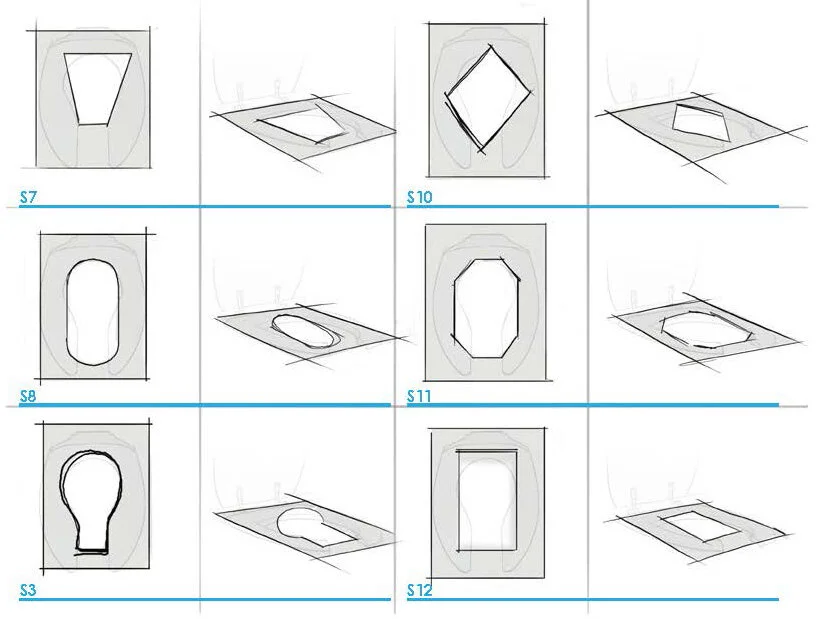
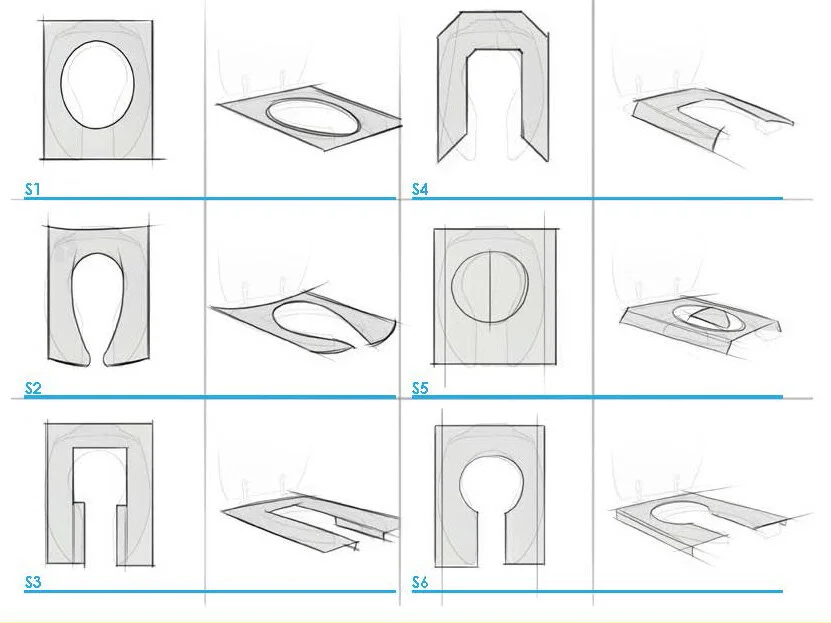
After presenting our concepts to Hospeco, they chose a few that they would like to learn more about. They also suggested testing flaps of material instead of full cutouts, to see if these concepts could be flushed from the seat hands-free.
We cut these variations out of tissue paper sheets (similar to the material of toilet seat covers), and began testing the placement and experience.
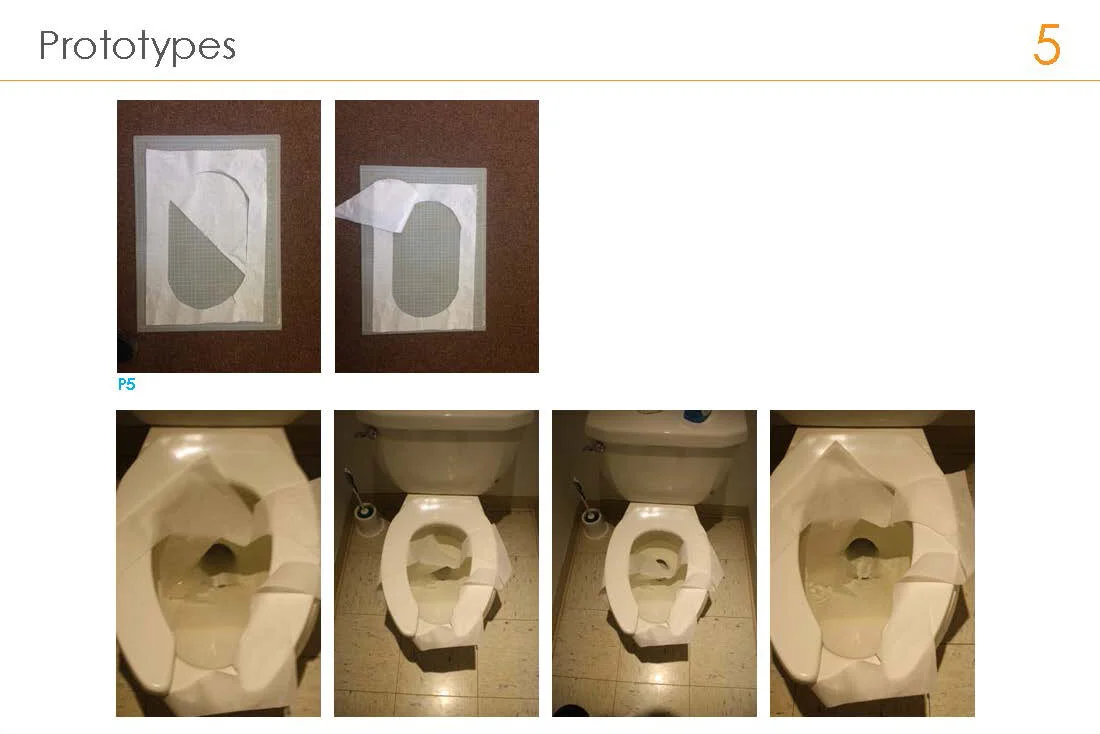
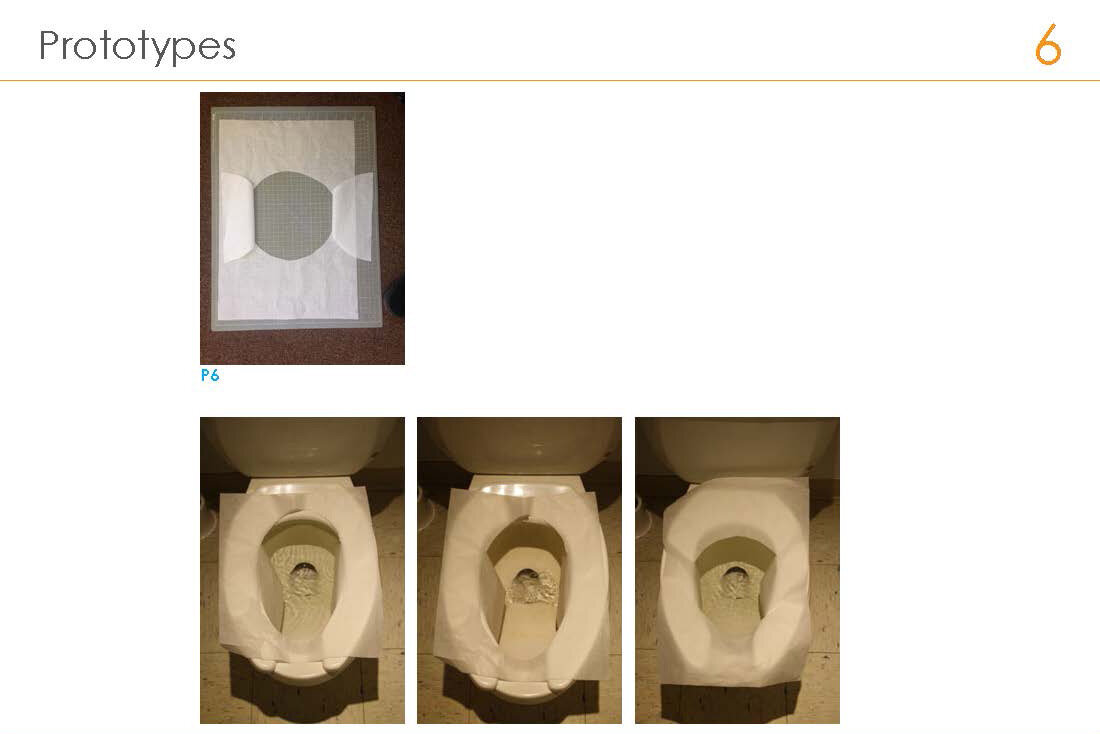
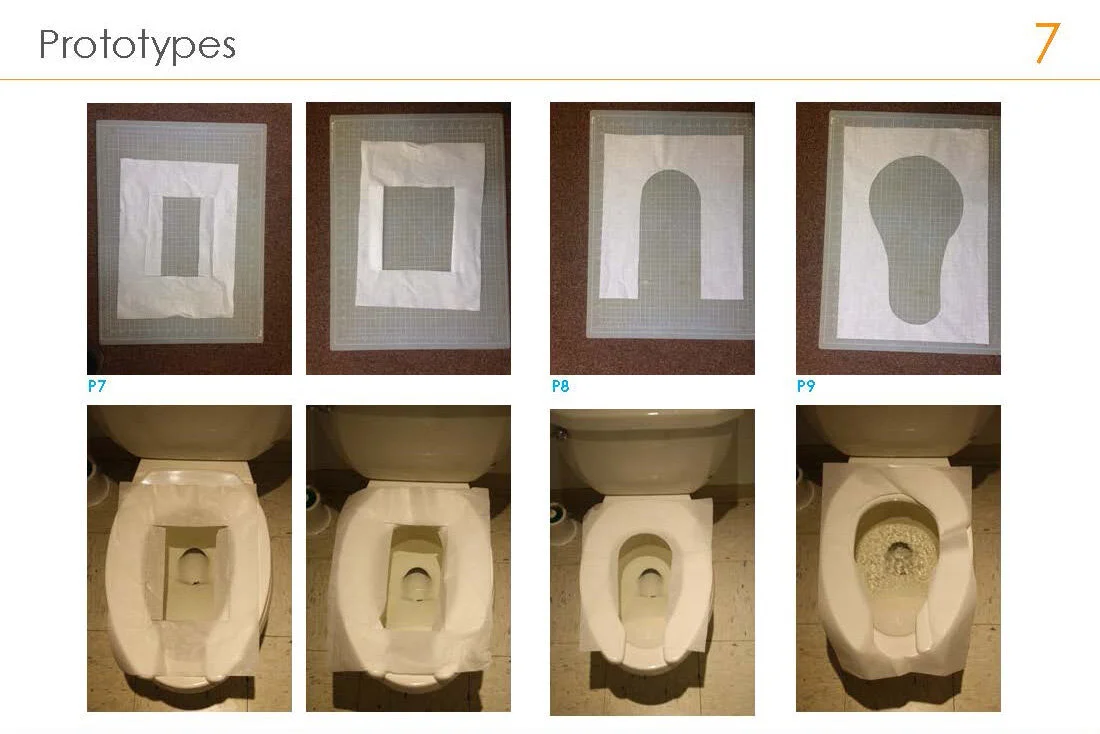
Based on these first tests, we:
Eliminated certain opening shapes
Decided to tweak the shape and placement of the opening
Discovered that if the seat cover requires a certain orientation, we may need to provide directional cues for proper placement.
Acknowledged we needed more test data to make an informed decision.
We used Illustrator to fine tune our shapes, then had our next round of prototypes laser cut for more consistency and larger scale testing. I created a questionnaire form so that we could collect the specific information we wanted to know.
I placed stacks of prototypes and stacks of questionnaires in each bathroom at our workplace, and asked all employees to try out the concepts throughout the week and review their experiences.
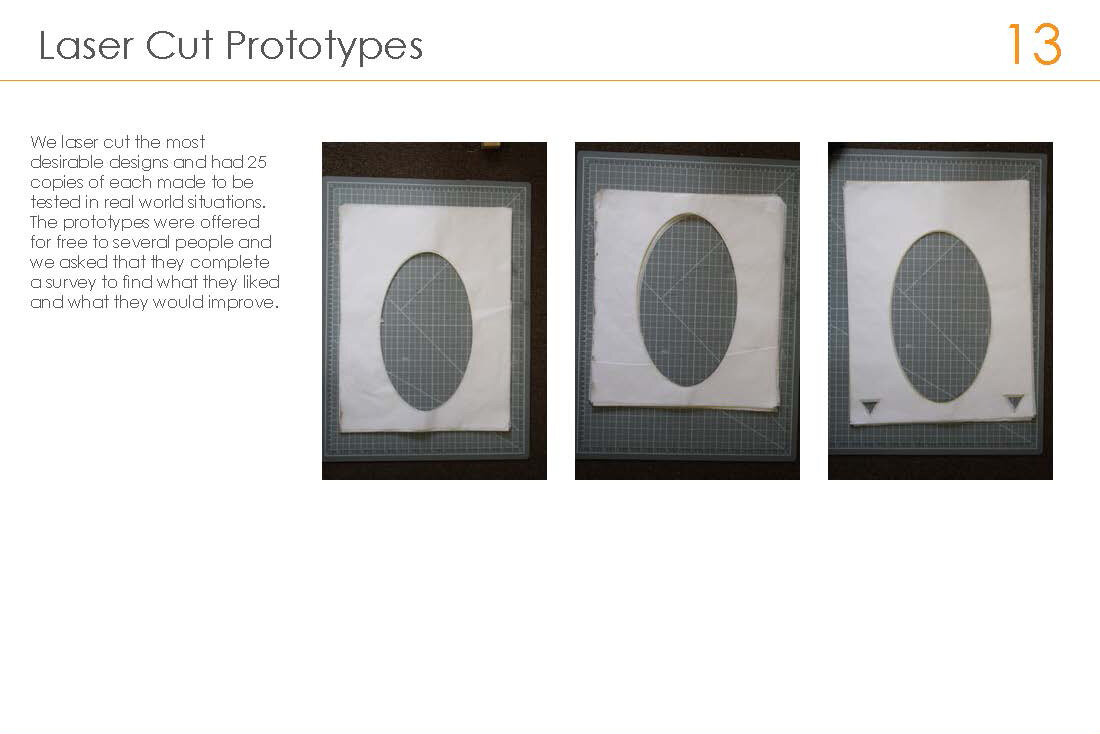
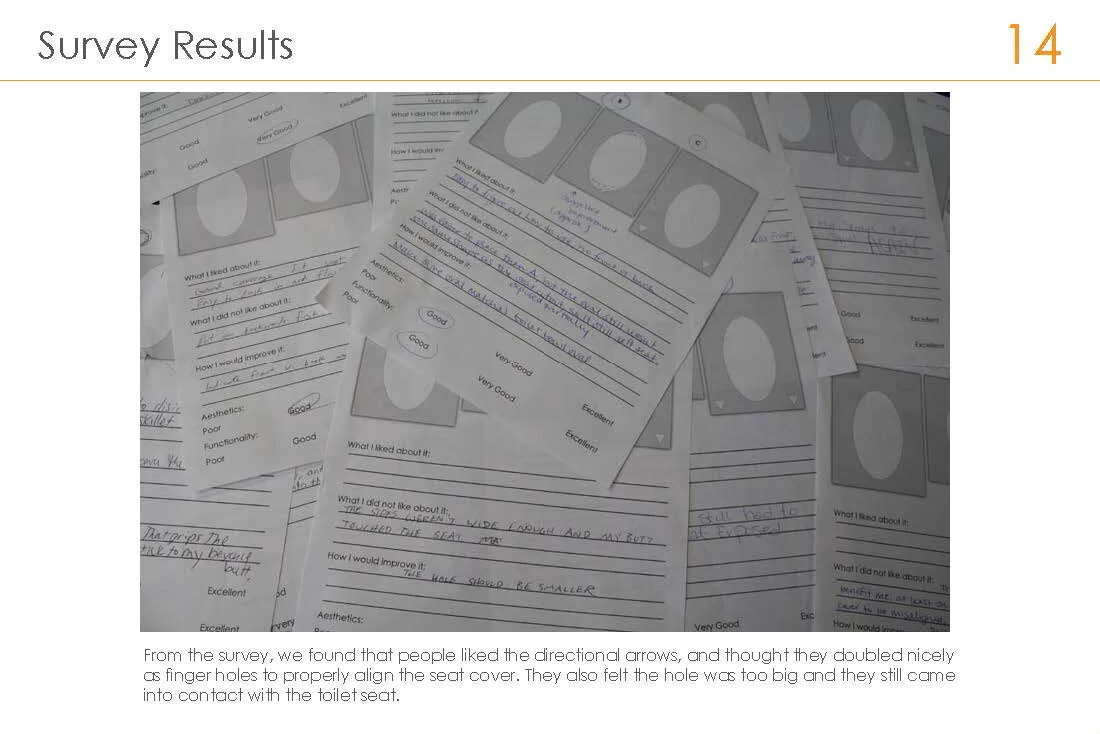
We presented the survey findings to Hospeco, and after discussing our testing plus our initial focus group insights, we chose to iterate more on:
Improved capability to stay in place during use
Ability to dispose of the seat cover hands-free by flushing it down the toilet.
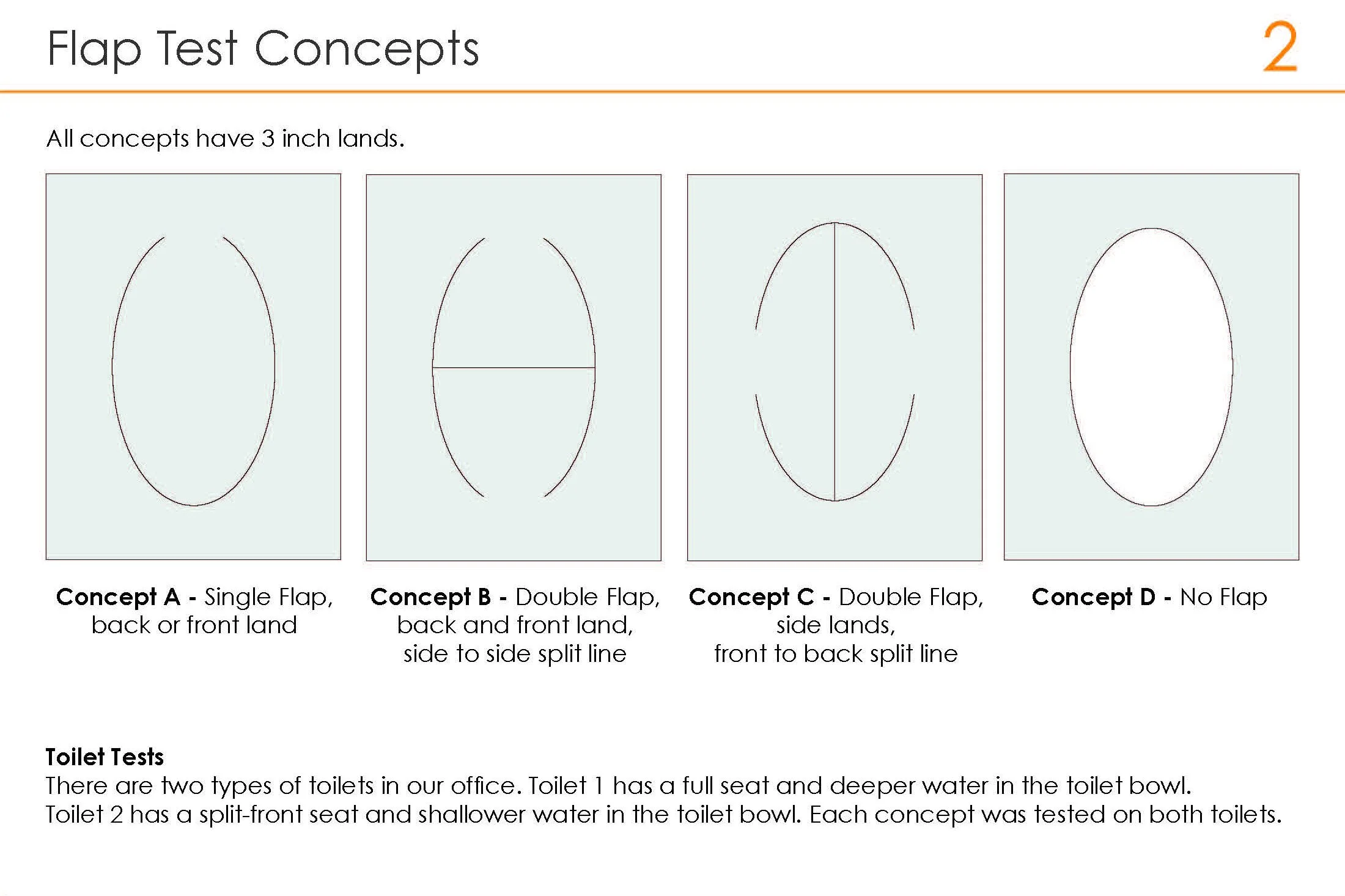
For our next round of testing, we compared the performance of flaps and tenting to see if that offered advantages over the traditional seat cover shape.
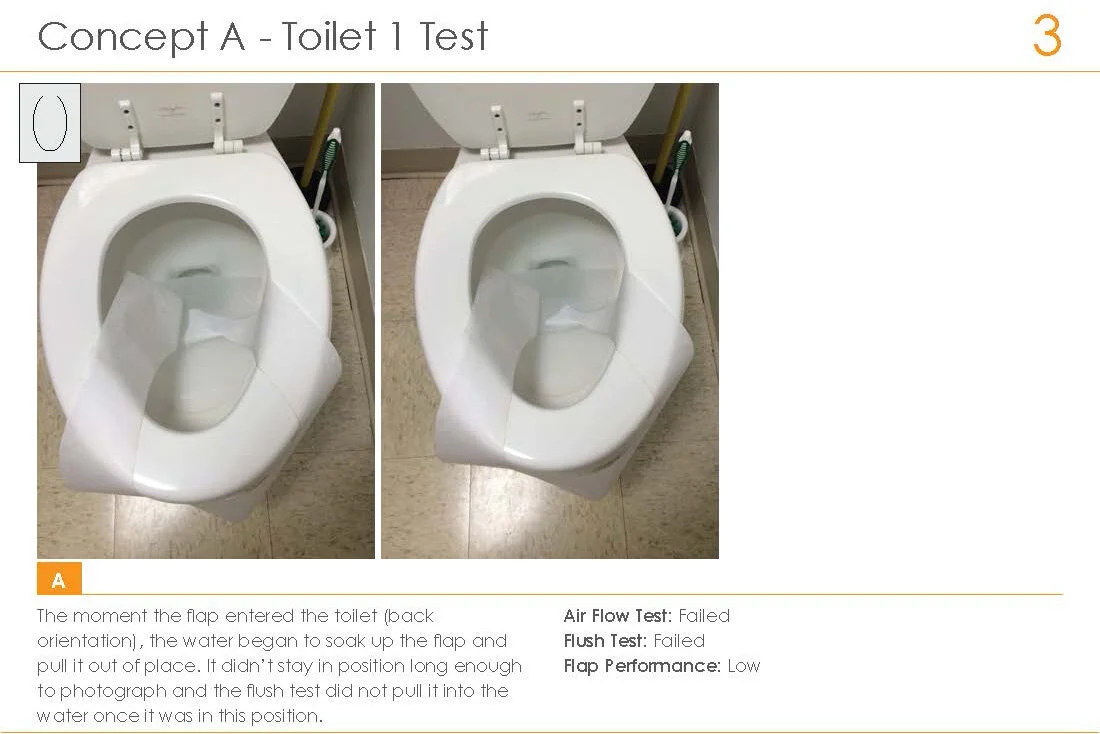
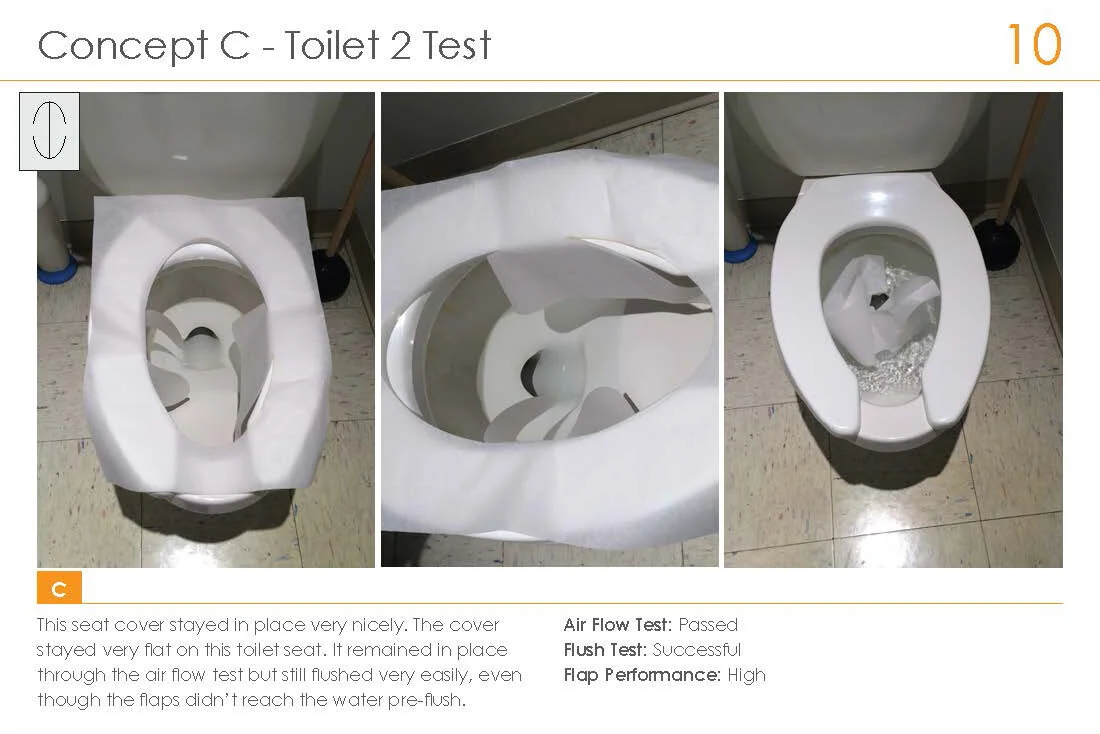
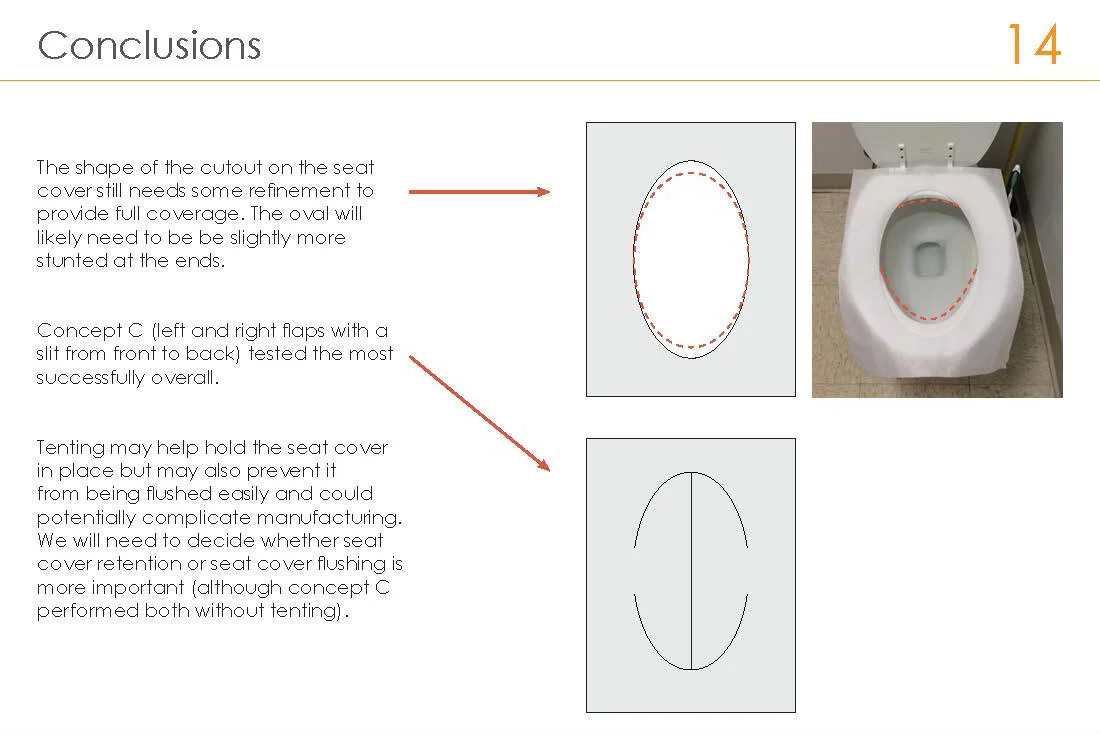
Flaps: Connected pieces that hang down in the toilet bowl so that the water can pull the cover in upon flushing.
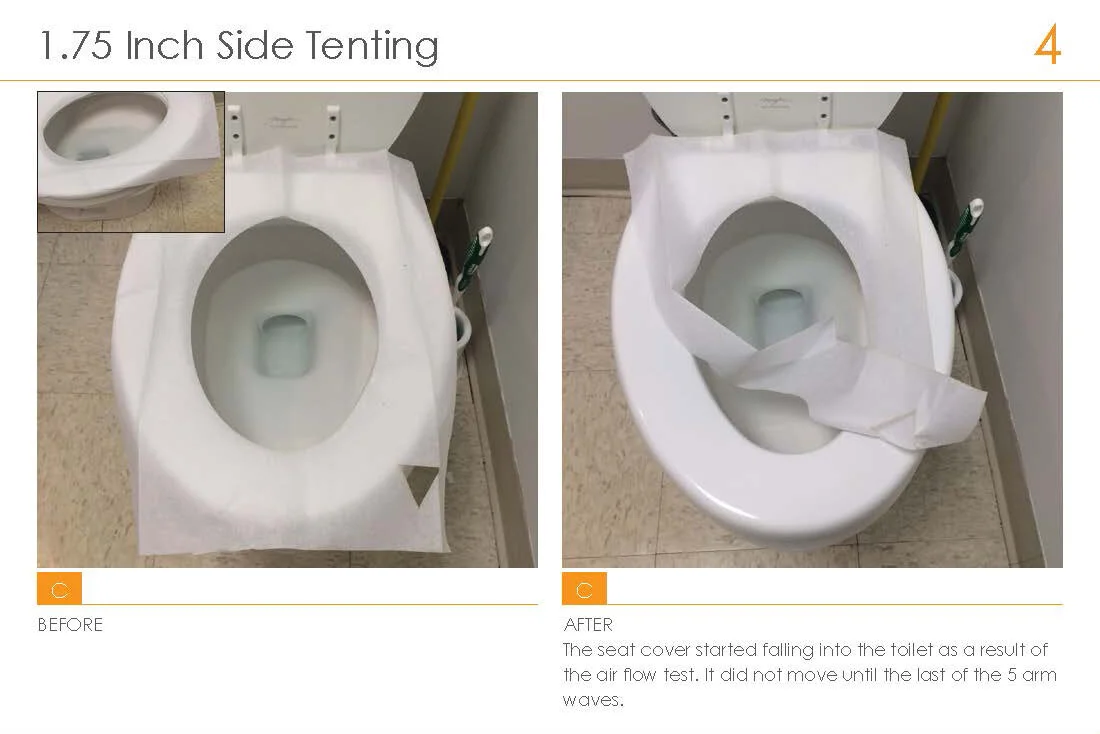
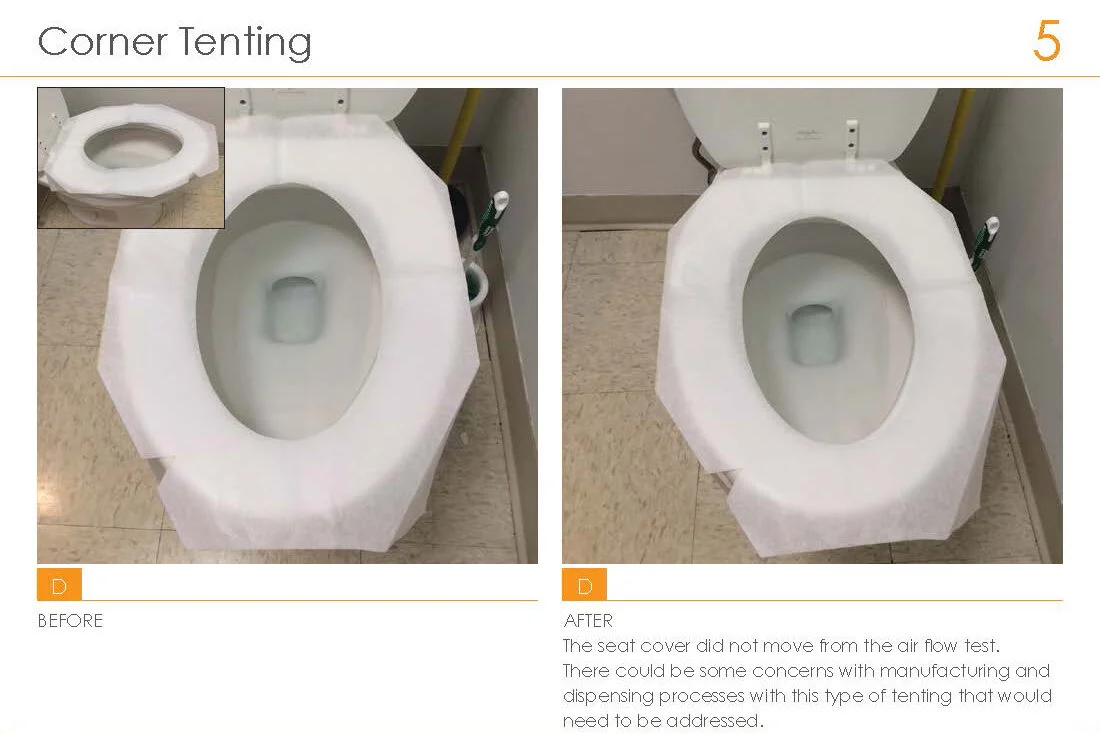
Tenting: Folds that create dimensionality, allowing the cover to wrap around the sides of the seat so it stays in place better.
Outcome
The client liked the concept of the side flaps and their ability to help the user dispose of the cover after use while not negatively impacting its placement during use. They took our concepts back to their internal team to discuss feasibility of production. Our company did not get the opportunity to develop this product further.
Biggest Win
Lots of iterative testing that gave us informed directions, for low effort and low cost.