Find Care Redesign
My Contributions
- Was the dedicated researcher on this workstream for about 2 years
- Analyzed voice-of-customer surveys and screen recordings monthly to uncover problem areas and trends
- Ran numerous types of research including interviews, surveys, concept tests, usability studies, and more
- Co-led a pilot of the MVP tool with 3 groups of call center agents (known as “advocates” at Humana)
Background
The existing “Find a doctor” search tool on Humana.com was outdated, clunky, and hadn’t had a dedicated user experience team before 2022. The search experience often resulted in no matches or a long list that wasn’t totally relevant.
Design Opportunity
Funding was put behind an initiative called Find Care, which allowed the team to create an interface completely from scratch to improve user experience and eventually replace the old search entirely.
Strategy
This was a longer-term discovery effort that involved:
A. Identifying our users’ main issues and pain points
B. Reviewing what other insurers were doing
C. Using data to uncover opportunities.
Goal
To make the tool more intuitive to use and improve search success for all user types.
Company
Humana
Team Members
Approximately 10 (Product, UX Design, Content, and Research)
Why I am featuring this project
I was put into a fuzzy space with few constraints and lots to learn
I was part of creating a tool from scratch
I conducted many types of primary research and data analysis as part of this body of work, and helped the team triangulate it
I defined what “research” and “insights” looked like for our pilot rollout
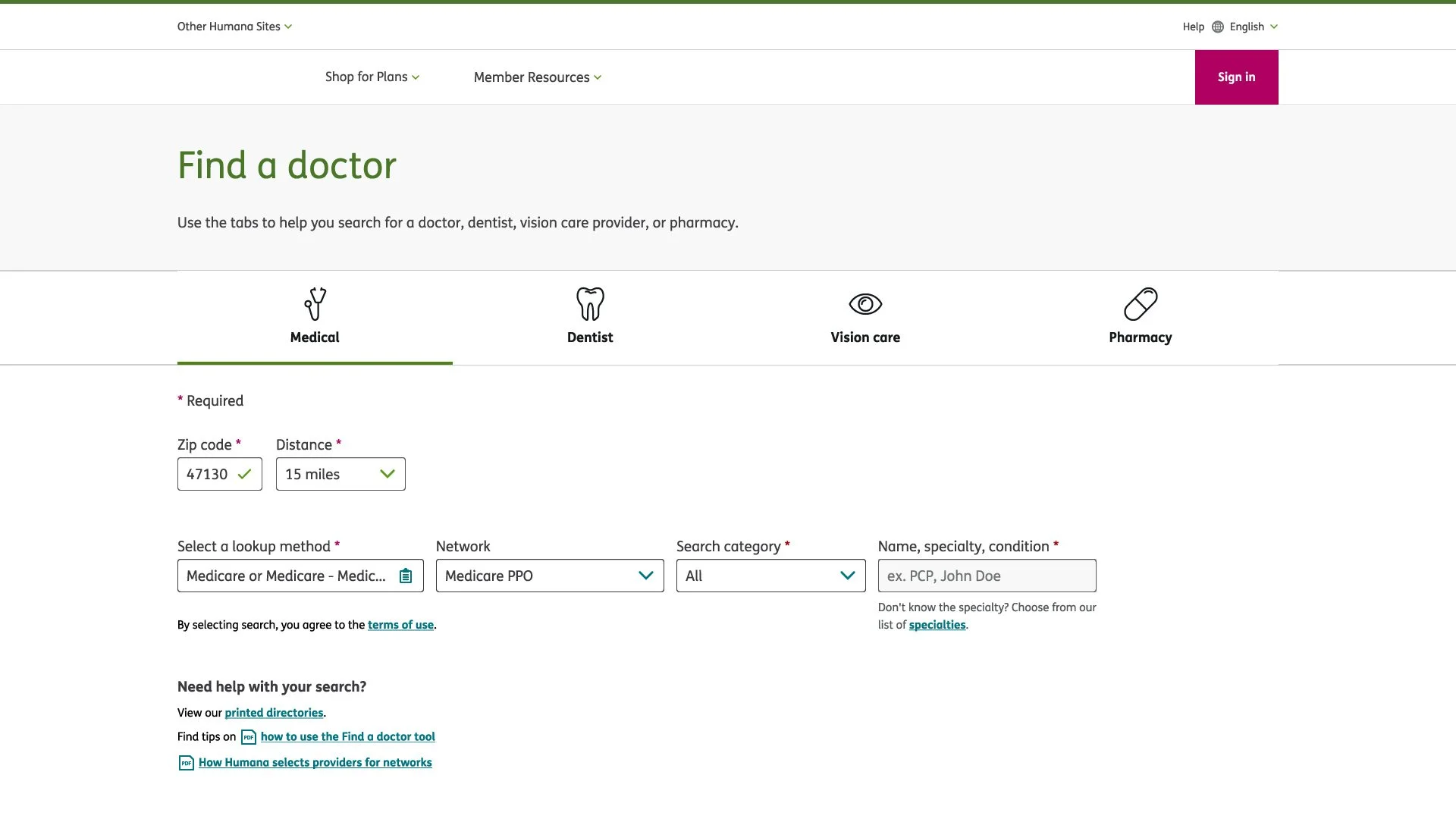
How the "Find a doctor" tool looked in 2023 before our team started to work on it.
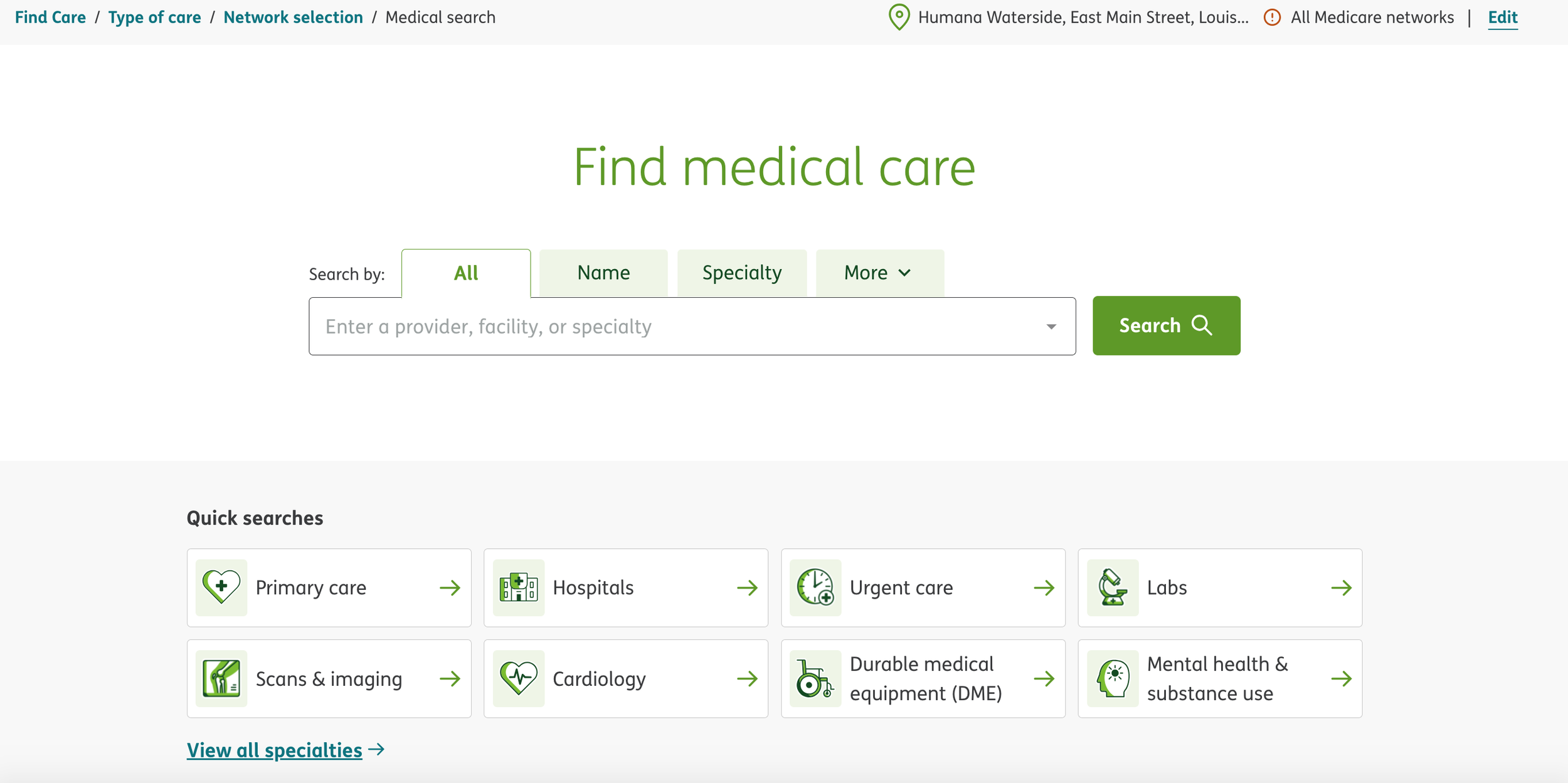
How the "Find Care" search looks today.
How the Find Care initiative came to be
The legacy “Find a doctor” tool had some of the highest traffic on the entire website, and was utilized by more user types than any other Humana digital tool, including members, prospective members, call center agents, sales agents, and healthcare providers.
The broader team I was part of focused on helping users self-serve digitally, and this digital tool was so awkward to use that it regularly drove calls, negative survey responses, and even complaints to Medicare. An initiative called Find Care was stood up in 2023 to build a brand new tool that better met user needs.
Discovering user needs
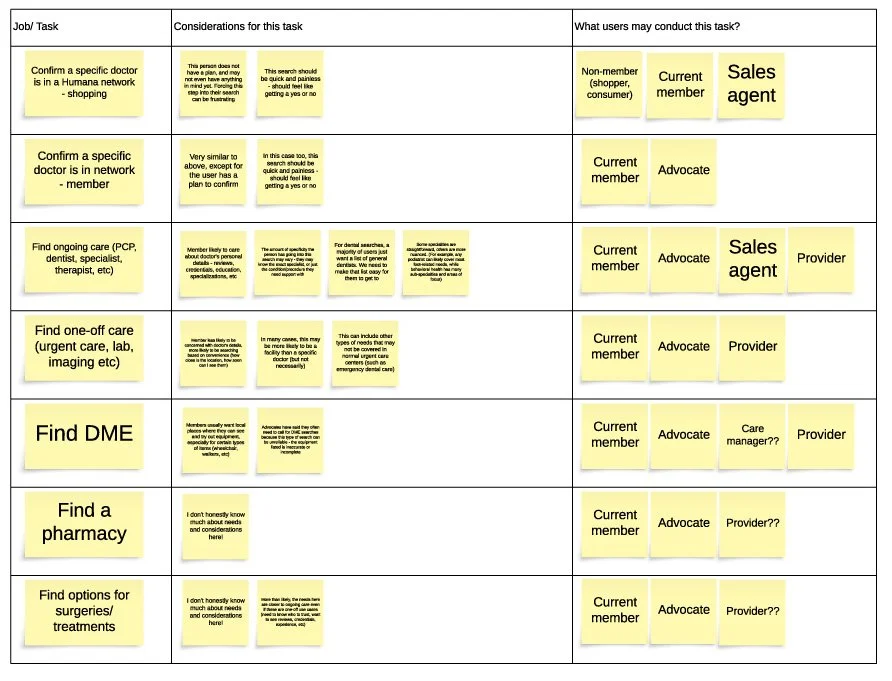
When I joined this work, my main goal was to understand how the tool was currently used, what jobs needed to be accomplished using this tool, and what gaps existed between them.
One great way to understand current state was digging into our data platforms, which housed voice-of-customer surveys from this page, screen recordings of site visits, and data inputted in the fields. I also set up several conversations with call center advocates, who regularly use the tool when fielding calls from members. They were able to comment about their personal experiences using it, as well as some of the motivations of our members when calling to find healthcare providers.
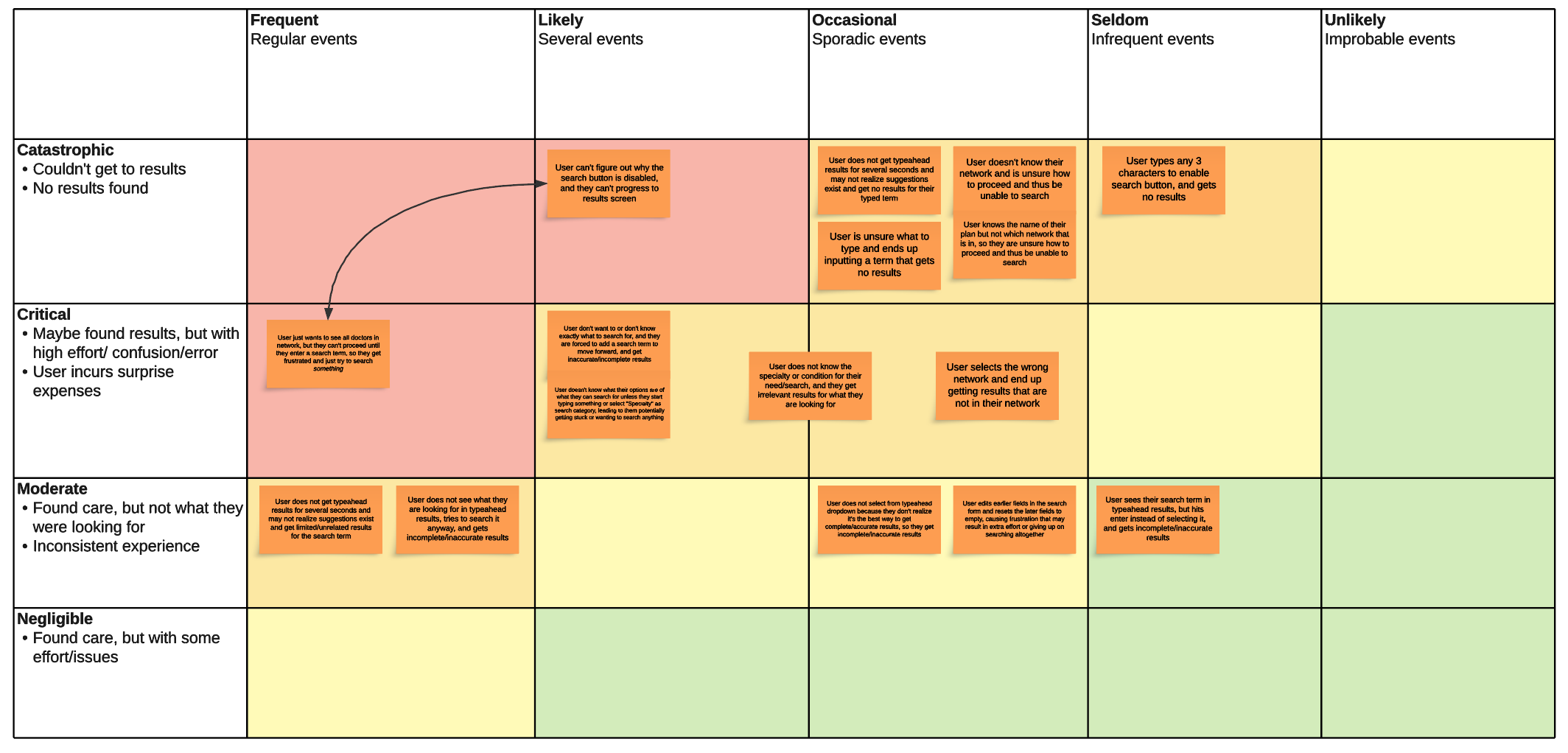
The team also performed a risk assessment matrix exercise to identify what might need more immediate attention in the current tool, knowing that the future Find Care experience may still be a couple of years out.
How to determine the brand new UX/UI
Since our team had the rare opportunity of designing an experience from scratch, we knew we wanted to make the search as intuitive and helpful as possible. Knowing some of the user needs and issues helped the designers draft some ideas, but getting several different options mocked up and in front of customers was a larger lift.
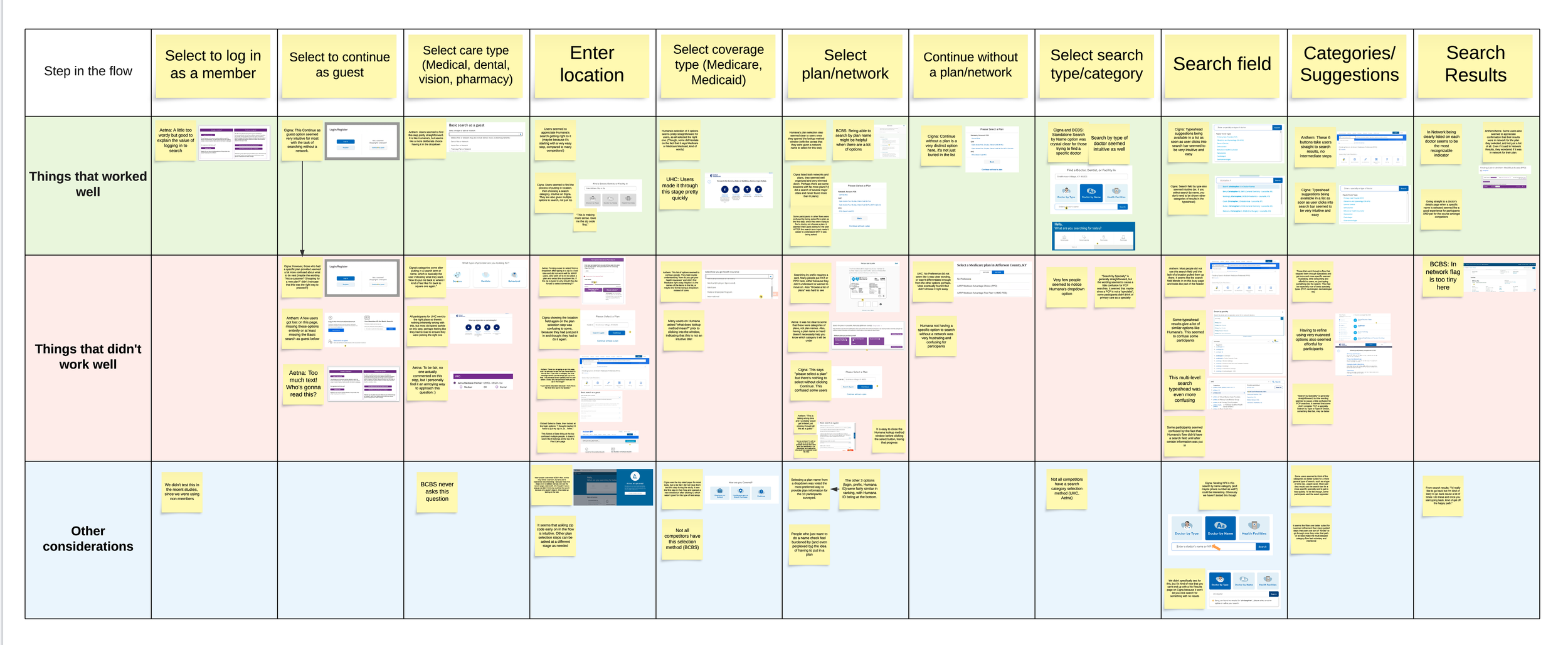
I suggested starting with what I called a “competitor usability study.” Our team identified several other doctor search tools, and I had participants go through some of the most common tasks on Humana’s site and a few other competitors’.
Using this exercise, I was able to show the team what performed well and what didn’t across each step of the search process. This allowed the designers to take inspiration from competitors to build Find Care’s first draft, but in a way that was already backed by usability evidence.
Piloting Find Care
After several more months of iterative testing, design updates, leader and stakeholder conversations, and development work, we finally had an “MVP” of the Find Care tool that was ready to use.
We knew we wanted to pilot the tool with a group of users. Most users do occasional, one-off searches. However, most call center advocates use the search tool multiple times a day while handling calls from members needing to find new doctors or check network coverage of an existing provider. We chose to partner with teams of advocates as we scaled the experience.
I organized and ran all research-related engagement with our pilot users, including a baseline SUS survey, a regular focus group cadence, and a survey link for them to leave feedback about the tool. I also watched call recordings to see how the pilot users navigated the tool on real calls. As we scaled the pilot, we introduced additional test groups.
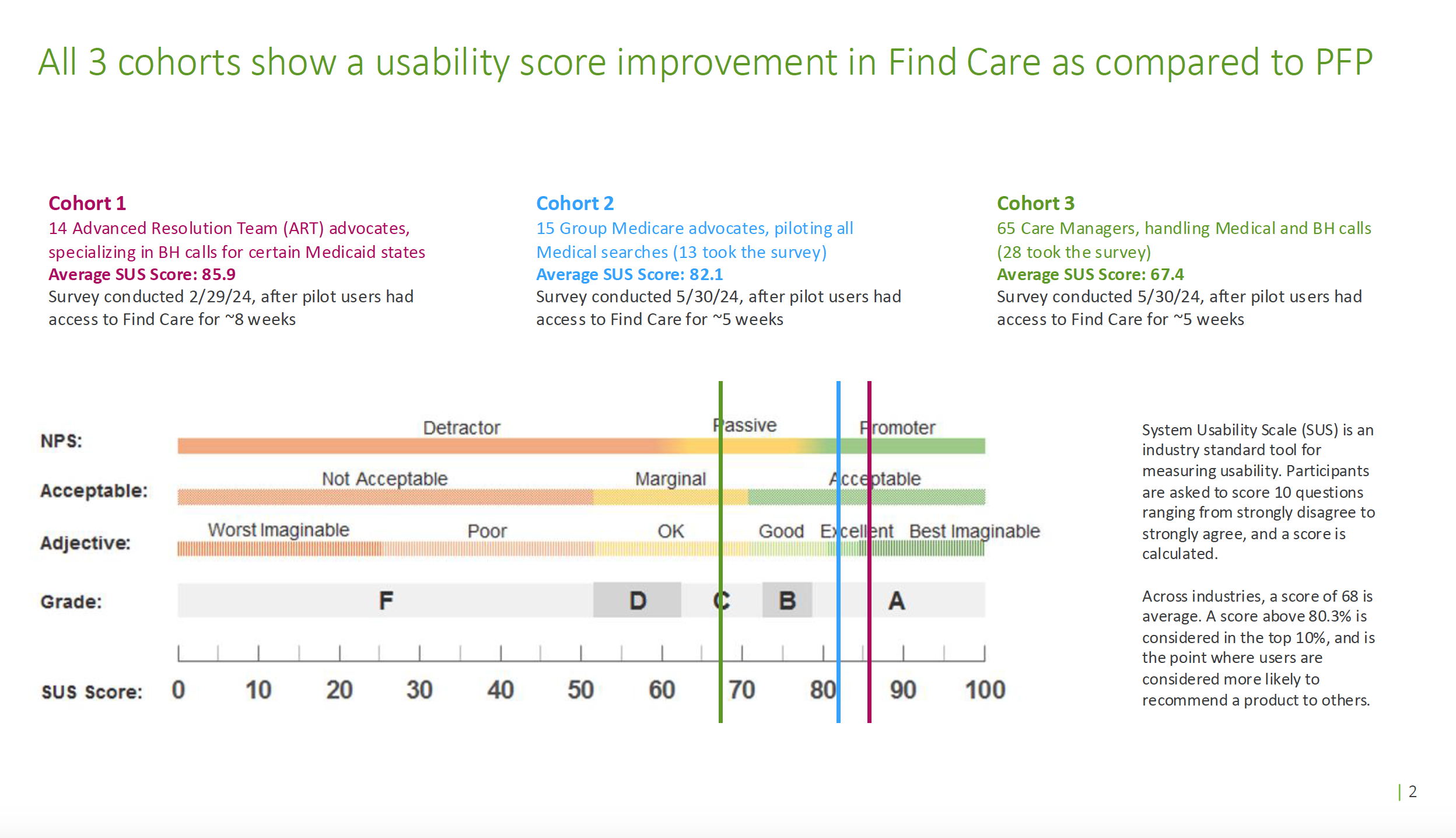
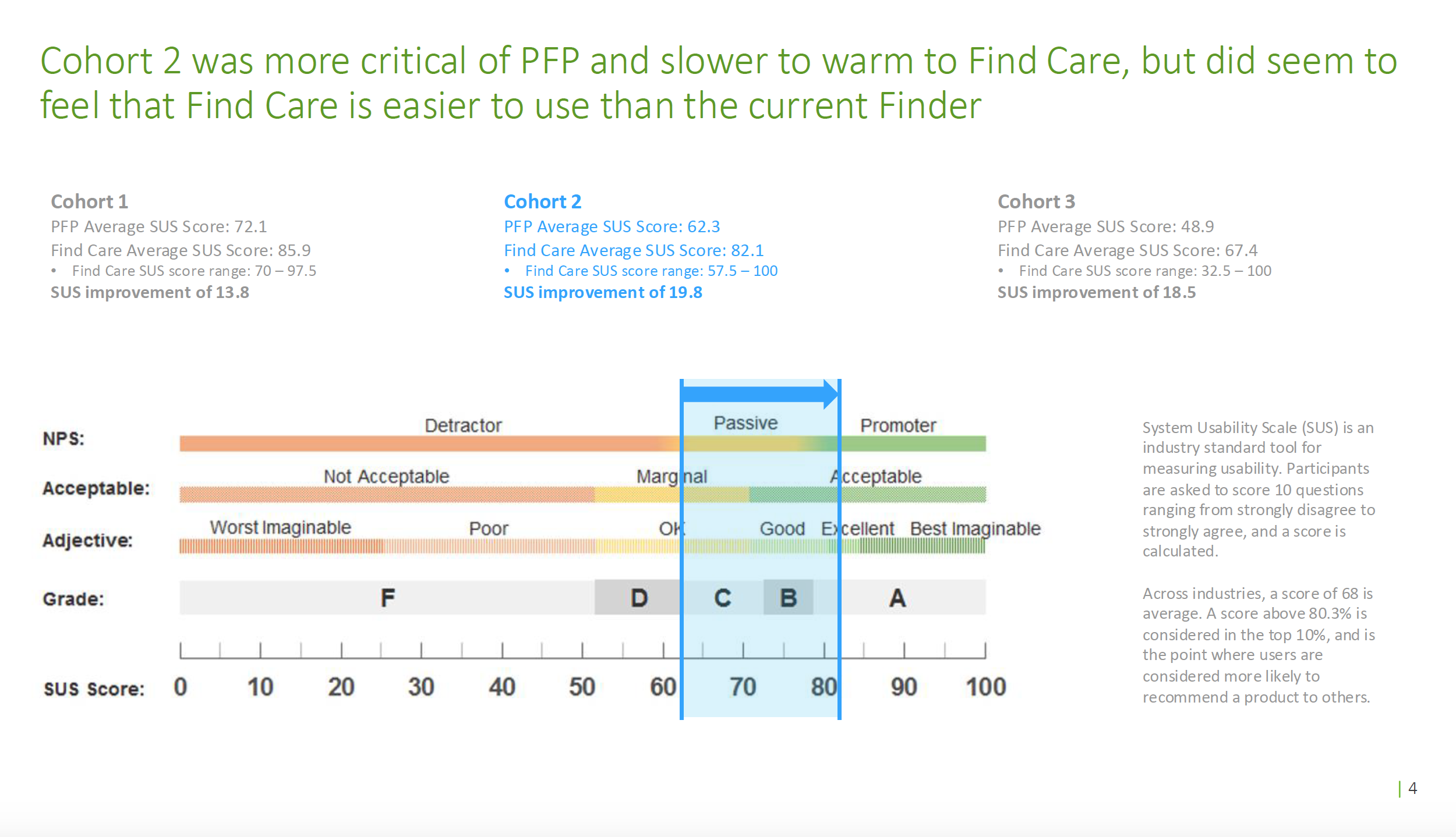
After several weeks of use, I did another round of SUS surveys, which showed that our Find Care experience was an improvement for all groups, which gave our team the go-ahead to start scaling to members.
Outcome
Today, the Find Care experience has fully replaced the legacy search tool and is available to all user types
The CSAT score for Find Care surpassed Finder month over month
Biggest Win
This workstream gave me a chance to lead an open-ended discovery effort as well run research with pilot users for the first time.