Purchase Process Design
Background
Conquest Maps is a small company, but most changes still affected many departments. This meant it was especially important for us to communicate and implement changes and new products in stages.
Strategy
When adding a new product, we had many stages with checkpoints for each department and main tasks to complete before moving on to the next stage.
Company:
Conquest Maps
Team Members:
Production
Marketing / Web
Design
Contributions
Head of Order Management (Shipping and Order Processing)
Head of Customer Service
Head of Printing
Social Media / Marketing / Design
Summary
When I joined the Conquest Maps team in 2016, I was the second employee hired. For many months, our team of 3 ran the whole company, so I was involved in many departments. I took over the management and shipping of orders, printing, and customer service. At times I posted on social media and provided graphic design support.
As the company grew, my responsibilities narrowed, but since I had knowledge in nearly every area, I stayed involved in higher level strategy in a lot of ways. In my last year at the company I trained a new Head of Customer Service and a Lead Printer. When I left the company I trained a new Head of Order Management, which included all Shipping and Order Processing tasks. I was responsible for developing a training strategy for each of these handoffs.
These experiences not only gave me deep knowledge in my specific departments, but a holistic understanding of the company, how each team member affected one another, and the systems and processes that needed to be in place for operations to run smoothly.

Case Study - How customers’ product understanding affected the company’s bottom line
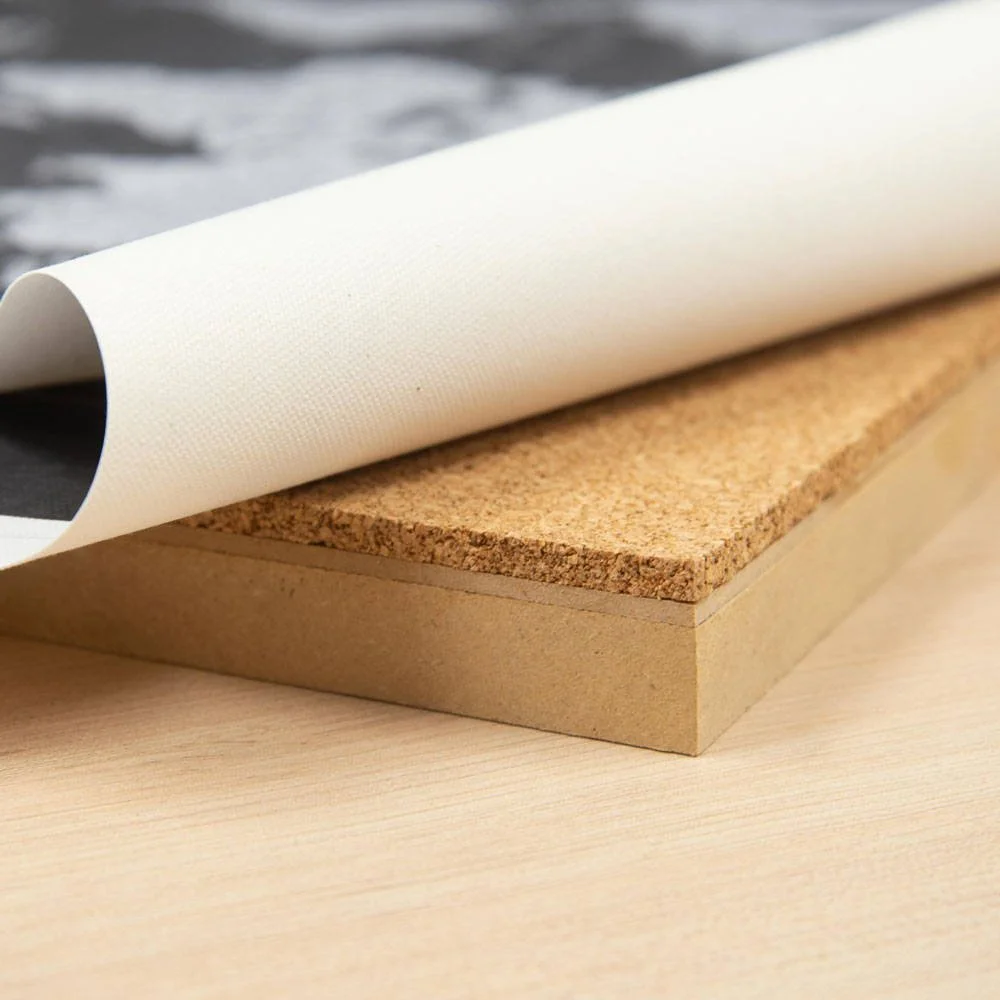
Conquest Maps’ bread-and-butter product was the pin board map. We were the only company who used both real cork for the backing and canvas for the print (competitors used foam board backing, paper prints, or both). These materials made for a fairly expensive purchase though, so we also offered all map designs in a paper poster as well as a lower-priced option.
Earlier on, the product offering was limited enough that we had separate listings for pin boards and posters, and it was easy to tell them apart. At some point, we had enough products that we grouped all maps of one design into a single listing, with selection menus for size and material.
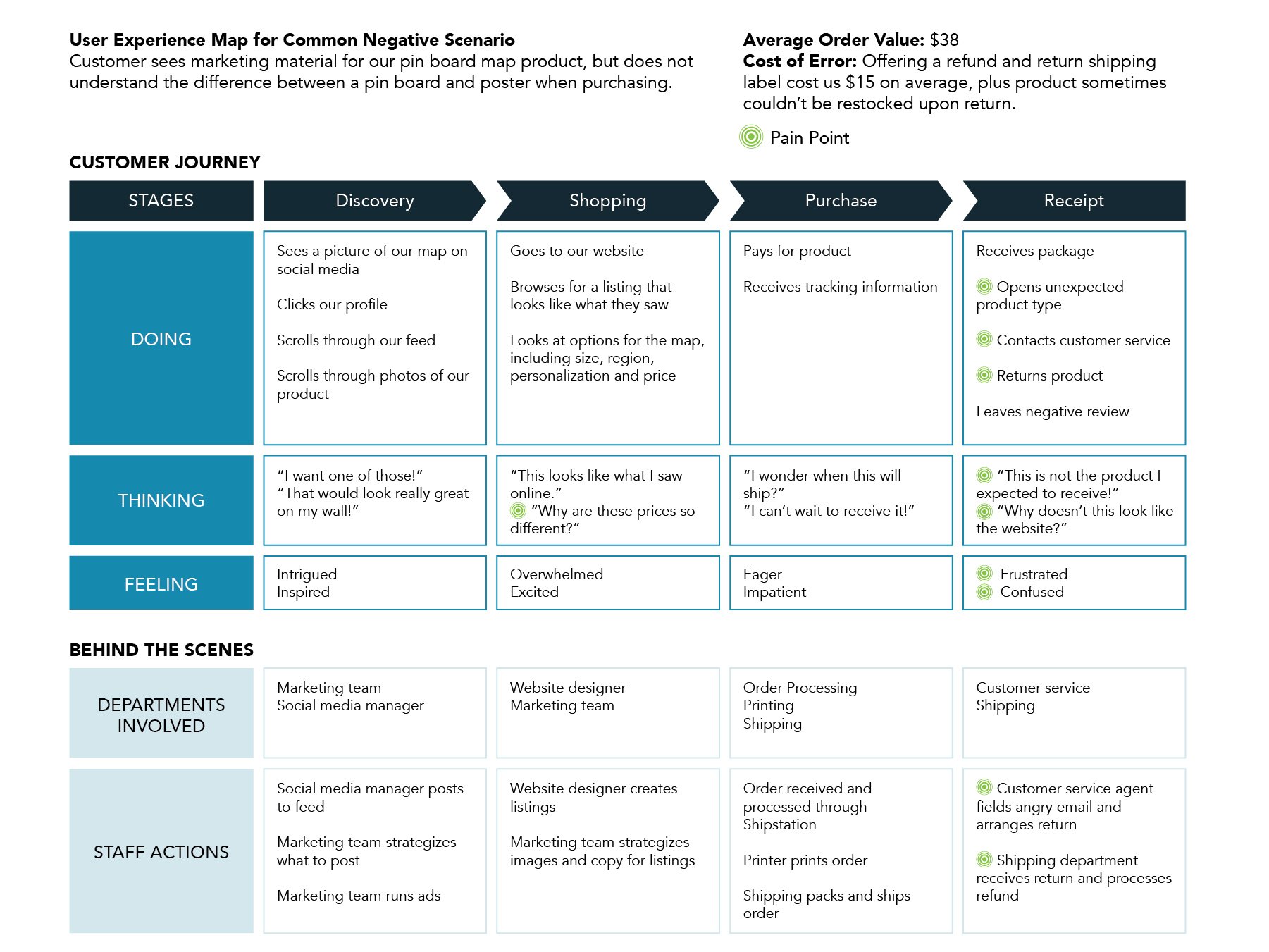
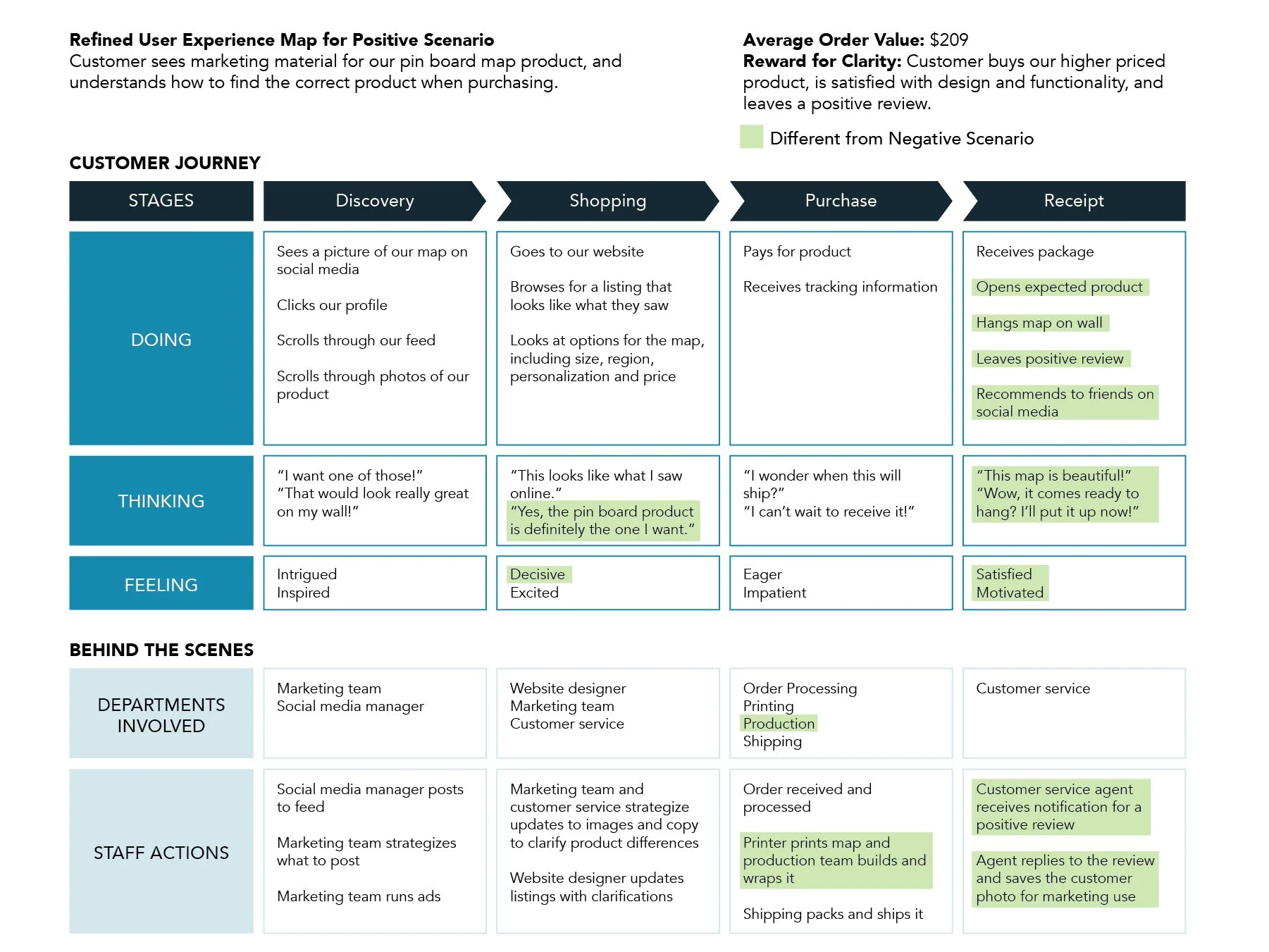
At this time, I was in charge of both customer service and shipping and noticed an increase in confused messages and returned products. Customers were seeing marketing materials for our pin board product, but did not understand the difference between pin boards and posters when purchasing.
This misunderstanding was costing us:
Lost revenue from returned products and return shipping costs
Lost productivity to create and ship unwanted products, which often couldn’t be restocked upon return
Lost productivity for customer service to respond to the same issue repeatedly and facilitate returns and exchanges
The average order value of the pin board products was about 5 times higher than the AOV for posters, and at least 90% of customers who came to our site were looking for pin boards vs. posters. Therefore, fixing this small issue could have big results:
Higher AOV
More customer satisfaction
Fewer returns
Fewer negative reviews
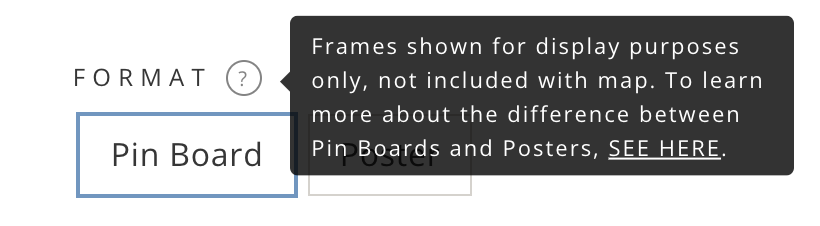
The changes were pretty simple - we added additional images and copy explaining the difference between the products, as well as adding a link next to the format selection leading to a page with further detail.
Case Study - Adding a new product to our catalogue
For the first few years I worked at Conquest Maps, our only pin board offering was a single panel. One of the most common requests I would see in our customer service inbox was for a larger map size.
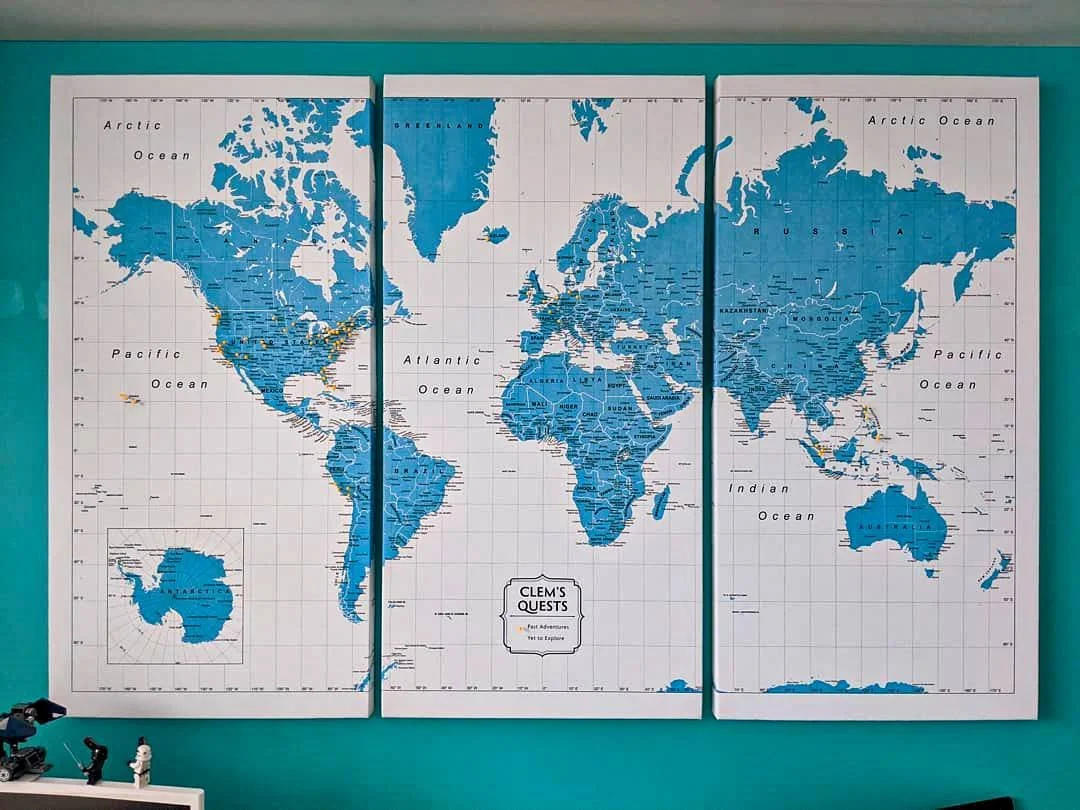
The owner had considered this in the past, but as our maps arrived fully built and ready to hang, a larger size made for prohibitively expensive shipping costs. We thought about it more, and realized we could offer a 3-panel version of our map, which would not only be a different aesthetic, but would provide a more compact shipping alternative.
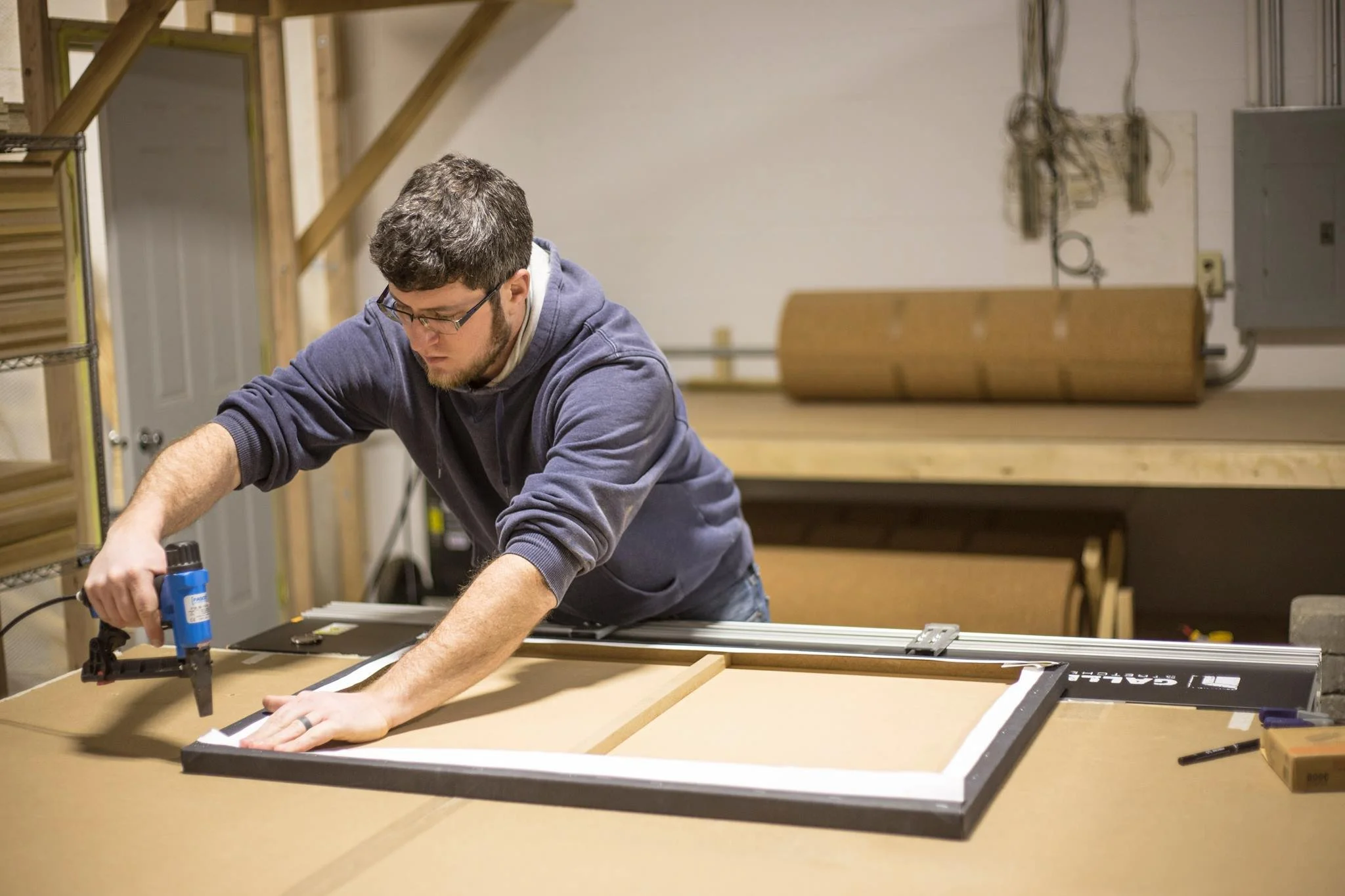
Offering a map in new coloring did take some time and effort, but did not require a different box, new production methods or changes to printer materials.
A different size however, especially one that was constructed in 3 pieces, made for a more complex problem to solve. Throughout the process, all departments were affected and had a part to play in the development.
We decided we would get started on the development, and then release the 3-panel map as a pre-order / beta test. The customers willing to purchase the map early would receive a discount on the final price, but would wait a few months to receive their product, and be asked to provide feedback on a potentially imperfect product.

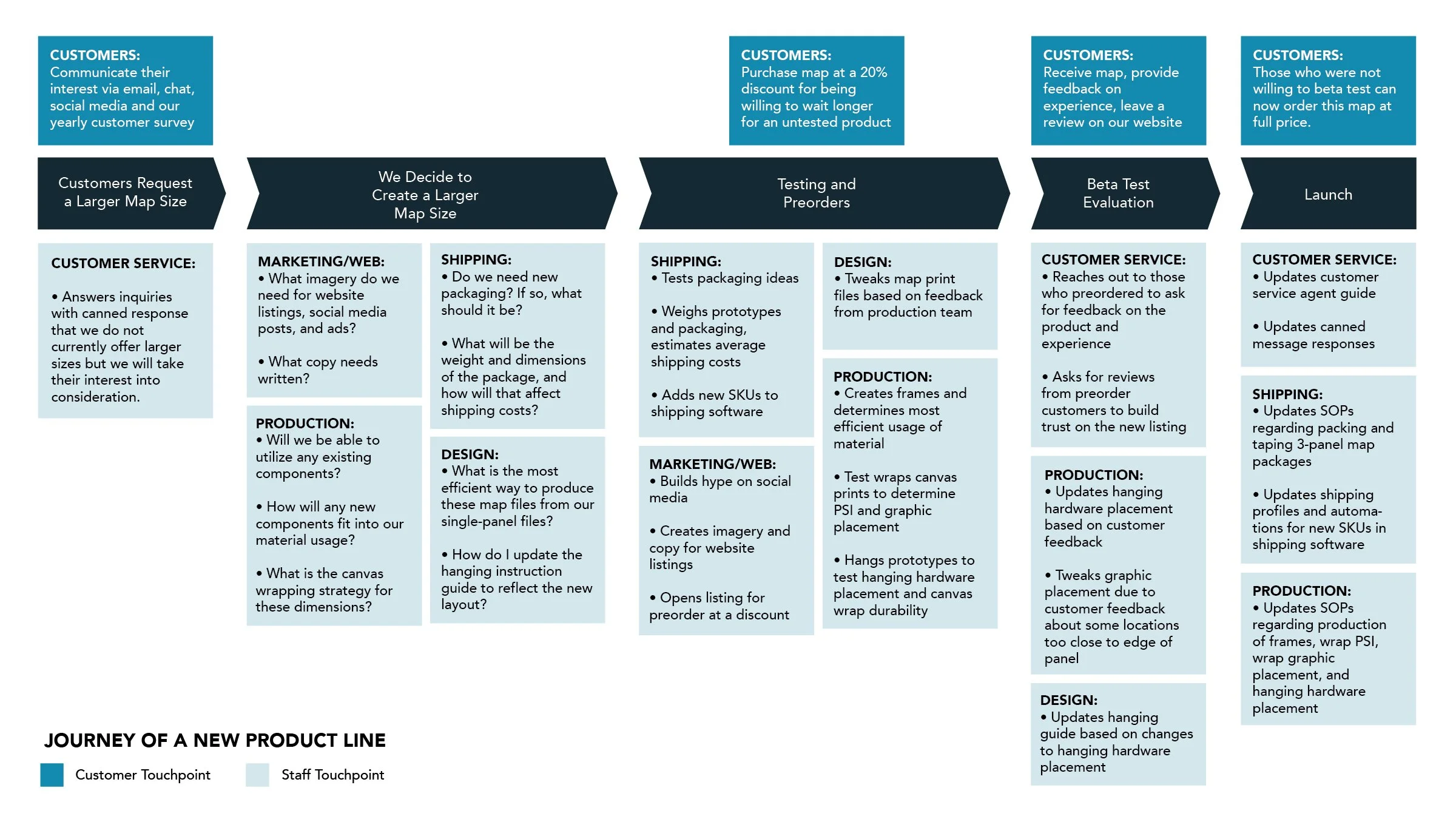
After receiving feedback from the recipients, we made some adjustments to the way the canvases were wrapped and the way the hardware was put on.
Once we finalized our changes, we were able to develop Standard Operating Procedures for building the 3-panel frames, wrapping the canvases, packing and taping the boxes and more. I also updated our Customer Service Guide, which is a database I built over several years with the answers to common questions and issues that future agents could reference.